 Zum Hauptinhalt springen
Cleaning Robots Berlin - Autonomous Cleaning Robotics
Cleaning robots in Berlin - autonomous vacuum and scrubber robotics for office, administrative and commercial properties. We advise on rental and purchase models, integrate robots into existing cleaning plans and combine smart sensors with documented quality control. Fixed teams take the edge areas, the robot the large surfaces.
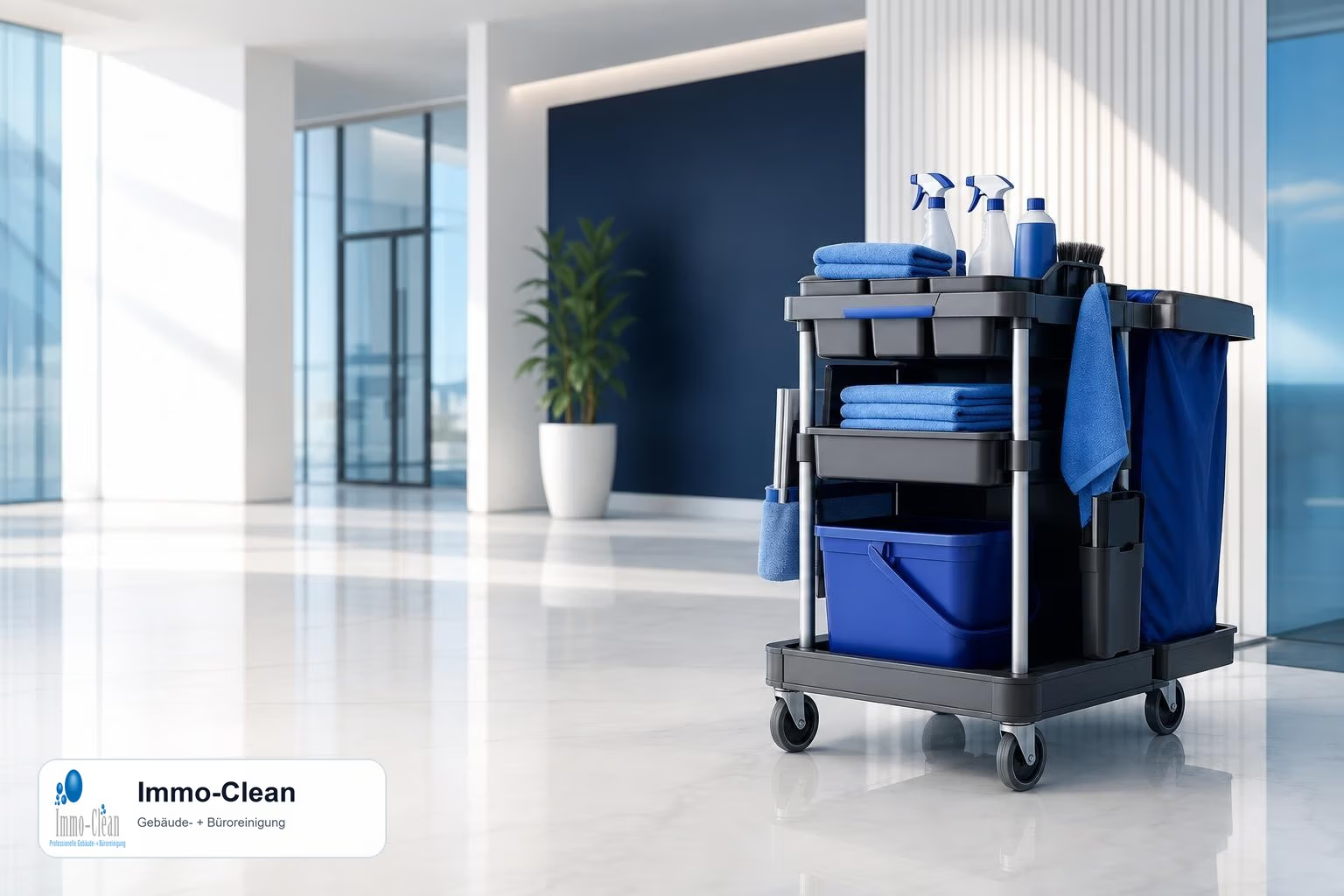
Cleaning Robots Berlin – On Site in Action
Autonomous cleaning robots support our teams in offices, hotels, and commercial properties throughout Berlin. Every deployment is prepared by our site management and monitored by trained staff.
- RobotsScrubbing and vacuum robotics with LiDAR and 3D cameras
- Division of labourRobots take large surfaces, fixed teams take edges and sanitary areas
- HoursDeployment outside business hours, inspection round in the morning
- EvidenceCloud fleet management with documented reporting
Cleaning robots for offices, commercial, logistics, industry, hotels and clinics
Cleaning robots are deployed in the most diverse industries in Berlin. We serve offices, commercial, logistics centers, industry, hotels and clinics with individually adapted robotics solutions.
Office
Office buildings with open-plan offices, conference areas and hallways. Robots for automated floor cleaning in off-peak hours.
Commercial
Commercial spaces with foot traffic, retail and shopping centers. Cleaning robots for consistently clean floor surfaces.
Logistics
Logistics centers and warehouses with large traffic areas. Robots for continuous cleaning of concrete and asphalt surfaces.
Industry
Production halls with hard-to-reach or heavily soiled areas. Special robots for industrial floors.
Hotel
Hotels with large lobbies, hallways and conference areas. Robots for continuous cleaning during guest hours.
Clinic
Clinics with the highest hygiene requirements. UV-C disinfection robots and autonomous floor cleaners for infection prevention.
Robot, sensors, software and cleaning head: technical components of modern cleaning robots
Modern cleaning robots consist of four central components: the robot platform, the sensors for environment detection, the software for control and the cleaning head for the actual task.
Robotics
Robot platforms with lithium-ion batteries, powerful drives and modular designs. Different models for every area requirement.
Sensors
LiDAR, 3D cameras, ultrasound, and safety bumpers keep the machine aware of people and obstacles. Staircases, landings, and sensitive zones are defined as no-go areas in the map, so the robot cleans its routes and never enters them.
Software
Cloud-based fleet management for several robots at once: route maps, charging-station logistics, and deployment reports in real time. Charging docks are placed so one robot finishes, docks, and hands over to the next without idle time.
Cleaning head
Swappable heads - sweeping, scrubbing, polishing, UV-C disinfection - let one platform serve lobbies, corridors, and sanitary approach zones, while our permanent team handles the edges, corners, and surfaces the robot deliberately leaves.
Cleaning robot deployment: Pilot, Test, Scaling, Maintenance
The entry into robot cleaning follows a clear sequence: pilot project for testing, real-world test, scaling to further areas and continuous maintenance. This is how the entry succeeds without surprises.
- Pilot: testing on a reference area with map setup, definition of cleaning zones, and staff training.
- Test: real-world operation with support from our service team, evaluating cleaning quality, acceptance and economics.
- Scaling: expansion to further areas with multiple robots in coordinated operation, cloud fleet management and reporting.
- Maintenance: regular maintenance, software updates and wear part replacement under a service contract with response times and reporting.
How robot-assisted cleaning works in a Berlin office building
A practical example of robot-assisted floor cleaning - representative of how we combine cleaning robots, charging stations and human inspection rounds. The exact setup depends on the property.
Starting point: An office building with a reception lobby, several corridor floors, a meeting wing and an underground car park. Management wanted the high-traffic areas kept reliably clean every day without cleaning staff disrupting daytime operations. The brief: a single-source solution combining modern technology with a permanent team.
Setting up the robot deployment: During the free site survey, our operations manager records the drivable surfaces, floor coverings, transitions and obstacles such as cables or loose mats. Charging stations are placed at safe, convenient points, routes are defined and exclusion zones marked out. Before regular operation starts, the robots are tested together with the building's technical staff.
Night-time operation, morning inspection: The robots cover the large floor areas outside business hours, while the building is largely empty. Our permanent team prepares the routes, gets the machines ready and also cleans edges and sanitary areas. An inspection round with a checklist verifies and documents the result before the workday begins.
What changes for the building
- Reliably clean corridors and lobbies every working day
- Cleaning outside business hours without disrupting daytime operations
- Fixed charging stations and documented routes instead of improvisation
- Human inspection rounds with a checklist after every robot run
- Edges and sanitary areas still handled by the permanent team
- Traceable documentation of every deployment for building management
Representative example of our workflow - not a quote and not a reference to a specific client property.
What determines the price of robot-assisted cleaning?
Robot-assisted cleaning is not charged as a flat rate per machine or per hour: the drivable area, the robot fleet and the service concept all matter. The following factors show how the effort is calculated - the binding fixed price always follows the free site survey.
What factors into the quote
- Floor area and robot routes - large, contiguous surfaces such as lobbies, corridors and logistics floors are ideal; transitions and obstacles determine route efficiency
- Number and type of robots - scrubbing robots, vacuum robots or a combination, matched to the surfaces and the desired frequency
- Monitoring and service intervals - cleaning sensors and tanks, replacing consumables and checking charging stations are fixed steps in the schedule
- Edge areas requiring manual work - edges, corners, sanitary areas and desks are handled by the permanent team; this share is defined separately and transparently
Fixed price after the survey
Robot-assisted cleaning is not charged as a flat rate per machine or per hour: drivable area, robot fleet and service concept shape the effort. The binding figure - fleet size, service intervals, and the manual share for edges and sanitary zones - is fixed after the free site survey. Pricing overview.
Frequently asked questions about cleaning robots
Answers on night-time safety, data protection, floor coverings and how robots and cleaning teams work together - compiled by our operations team for property managers and businesses in Berlin.
Is night-time cleaning with robots safe?
How do the robots navigate, and what happens to the data?
Do cleaning robots replace the cleaning team?
Which floor coverings are suitable for cleaning robots?
What happens when an obstacle blocks the robot's path?
How are the cleaning robots maintained?
Does robot cleaning make sense for smaller areas too?
In-depth articles
What our customers in Berlin say
Real Google reviews from Berlin facility managers and building operators who run robotic cleaning alongside our permanent teams.
★★★★★
Operators accompanying our Berlin cleaning-robot pilots leave excellent Google reviews once the first route reports arrive. They praise transparent documentation, machines deployed alongside trained crews rather than instead of them, and measurable relief on night shifts across large hall floors. Our stance stays honest: robotics helps where it helps – and we say where it does not.
Contact & Offer
Based on your details, we prepare a transparent, site-specific calculation. Describe the drivable area and the surfaces involved - our site management under Managing Director Dawid Marczyk assesses robotic feasibility personally and typically replies within 24 hours on weekdays.