 Skip to main content
Carpet Cleaning Berlin - Fibre-Matched Hot-Water Extraction & Encapsulation
Office carpets absorb Berlin street dust, winter slush, and years of foot traffic. Immo-Clean GmbH identifies fibre type on site, then applies hot-water extraction, encapsulation, or low-moisture methods to lift embedded soil from wool, polyamide, and sisal. Tariff-bound permanent staff deliver verifiable cleanliness for offices, hotels, and practices.
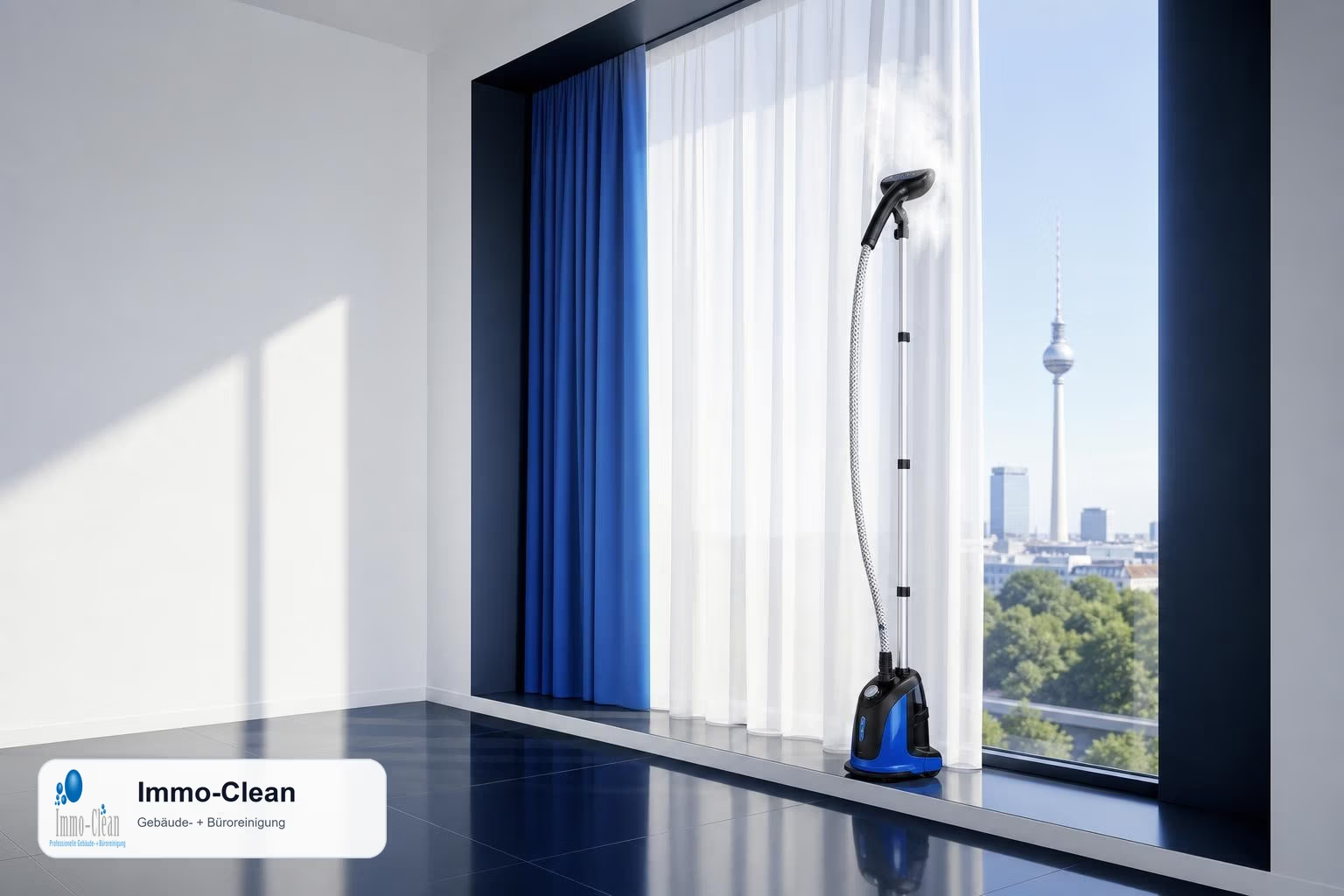
Carpet Cleaning: Fibre-matched extraction for long-lasting cleanliness
Tariff-bound permanent staff, fibre identification on site, and matched extraction methods remove embedded soil and stains from wool, polyamide, and sisal carpets across Berlin. Before/after photos document the result.
- FibresWool · polyamide · sisal · carpet tiles · runners
- MethodsHot-water extraction · low-moisture encapsulation
- EvidenceBefore/after photos with timestamps
- ExtrasStain protection · deodorising · fibre sealing
Wool, polyamide, and sisal each set their own chemistry and drying window, so carpet pricing always begins with an on-site fibre and soil check - minimum order values plus area tiers sit on the Pricing page, and the survey ends in one binding fixed price per zone.
Carpet Cleaning: Fibre-matched methods for offices, hotels & practices
The Carpet Cleaning Berlin service from Immo-Clean GmbH covers commercial office carpets, residential rugs, fitted carpet tiles, and stair runners across all property uses. Fibre identification, matched extraction methods, and an on-site site manager ensure property managers receive verifiable, value-preserving results.
Matching the method to the carpet
We identify fibre type on site - wool, polyamide, sisal, or mixed - and trial an out-of-sight patch with the intended method. Hot-water extraction suits synthetic carpets; low-moisture encapsulation protects natural fibres; controlled spray-extraction handles deep soil without shrinkage.
Standards and quality benchmarks
Our carpet programme is built on Carpet and Rug Institute (CRI) guidance, DIN EN 13549, and DGUV rules. Where a property demands more, BIV benchmarking applies. Each quality loop leaves a written trail, so facility teams can audit every cycle whenever they wish.
A dedicated site manager on site
A named carpet specialist runs each contract: they identify the fibres, set the drying protocols, and remain your direct contact from first extraction to annual deep clean, present on site throughout larger programmes. Carpet programmes currently cover office floors in Berlin-Mitte, hotel corridors in Charlottenburg, and residential common areas between Pankow, Spandau, and Köpenick; every active location is mapped on the Berlin service areas page.
Records, photos, and follow-up services
Every carpet zone is photographed before and after, and the visit report records the fibre classification, the chemistry used, the drying time achieved, and any stain protection applied - documentation that survives staff turnover on both sides. Around the carpet programme we also run office cleaning in Berlin, everyday practice cleaning in Berlin, and periodic basic cleaning in Berlin for the same buildings.
Carpet Cleaning in All Berlin Districts & Brandenburg
Carpet care in Berlin-Mitte, Charlottenburg, Friedrichshain, Kreuzberg, Spandau, or Köpenick follows one principle: the fibre decides the method. Wool and sisal are cleaned with low moisture, polyamide tolerates hot-water extraction, and carpet tiles are maintained in rotation so walkways never show wear first. The same fibre logic applies from Pankow and Neukölln to Wilmersdorf, Schöneberg, Tempelhof, and Steglitz - see the Berlin service areas page for the full map.
Berlin-Mitte & Eastern Districts
Across Berlin-Mitte our crews extract office open-plan carpets with short drying times, in Friedrichshain agency carpet tiles with low-moisture methods, in Lichtenberg insurance-office carpets with documented processes, and in Hellersdorf and Marzahn housing-estate common areas.
Kreuzberg, Neukölln & Northern Districts
Carpet cleaning in Kreuzberg covers co-working spaces around SO36 with spot treatment plus full extraction, while carpet cleaning in Neukölln addresses call-centre carpets around Hermannplatz. Pankow and Reinickendorf round off the map with staircase runners and office carpet tiles, cleaned around tenant schedules.
Charlottenburg-Wilmersdorf & City West
City West carpets demand care: in Charlottenburg we deep-extract hotel corridors near Kurfürstendamm, in Wilmersdorf we hand-clean wool carpets around Olivaer Platz, and in Schöneberg we maintain Bavarian Quarter office floors.
South, West & Brandenburg
In southern Berlin we cover Tempelhof older office carpets, Steglitz seminar rooms, Zehlendorf villa runners, Lichterfelde, and Treptow. Spandau adds logistics-office carpets with heavy soiling, Köpenick and Adlershof hotel and research-area floorings. Framework customers in Potsdam and throughout Brandenburg receive the same extraction standards.
Mitte: Open-plan offices - deep extraction removes stains and odours with short drying times.
Friedrichshain-Kreuzberg: Co-working spaces - spot treatment plus full extraction restores a uniform look.
Pankow: Practice consulting rooms - allergy-friendly extraction improves indoor air.
Charlottenburg-Wilmersdorf: Hotel corridors and conference rooms - shampooing revives colour and reduces wear marks.
Further Carpet Cleaning Services
Carpet Cleaning for Every Carpeted Property Use
Different uses mean different soils, traffic intensities, and timelines. We match method, drying time, and frequency to the specific use of each zone.
Office Building
Open-plan floors, meeting rooms, and corridors receive low-moisture encapsulation with short drying times, aligned with office hours.
Hotel & Hospitality
Corridors, conference rooms, and back-of-house carpets are cleaned on documented cycles that keep guest areas presentable at all times.
Medical Practice
Carpeted consulting rooms are deep-extracted with allergy-friendly chemistry, improving indoor air for patients and staff.
School & Daycare
Classroom carpets receive deep extraction during holidays, with spot treatment between terms for high-traffic corridors.
Co-Working Space
Carpet tiles receive low-moisture cleaning that keeps members working without long downtime, with documented visit logs.
Restaurant & Gastronomy
Spills and food stains are treated promptly; full extraction removes grease residue without damaging the carpet fibres.
Retail & Store
Heavily soiled retail floors are deep-cleaned to maintain a bright, welcoming appearance for shoppers.
Call Centre
High-footfall desk areas receive consistent deep extraction with documented visit logs for facility audits.
Insurance & Corporate
Documented cleaning cycles satisfy internal hygiene requirements and provide traceable records for branch audits.
Residential Complex
Common-area carpets and entrance mats get routine extraction, deep-cleaned monthly for hygiene and freshness.
Fibre Types and Methods We Use
Choosing the right method protects fibre structure, colour, and pile. Before any full deployment, we test the fibre, the soil, and material compatibility.
Polyamide (Nylon)
Most common office carpet. Tolerates hot-water extraction and pH-balanced chemistry. Encapsulation extends intervals between deep cleans.
Wool & Wool Blends
Natural fibre - low-moisture encapsulation or controlled extraction only. Hot water and harsh chemistry shrink or distort the pile.
Sisal & Jute
Plant-fibre rugs - very sensitive to moisture. Dry compound cleaning and gentle vacuuming protect the structure.
Carpet Tiles & Glued Carpets
Tile systems allow partial replacement if needed. Low-moisture methods prevent adhesive failure and seam lifting.
Carpet Cleaning in Eight Clear Steps
From fibre identification to the drying protocol, every carpet assignment follows the same eight documented stages.
- Fibre identification: we identify the fibre type on site - wool, polyamide, sisal, or mixed - and trial an out-of-sight patch with the intended method.
- Each zone gets its own line in the service schedule: fibre, soil level, method, agent, and the agreed visible outcome.
- Dry vacuum pickup precedes any wet step to remove 39% more particulate matter from the backing before chemistry is applied.
- Identified stains receive targeted treatment with fibre-safe agents matched to tannin, oil, protein, or dye type.
- Hot-water extraction, encapsulation, or controlled spray-extraction is selected to match the fibre, the soil, and the access window.
- An invisible protective fibre layer is applied where extra protection against future staining is required.
- Air movers accelerate drying where the timeline is tight, and walking-surface readiness is verified before handover.
- Each visit closes with before/after photos per zone, the fibre and stain record, and the next extraction date - documentation your facility audit can rely on.
Carpet Materials in Practice: Fibres, Methods, Limits
What wool, synthetic, and plant fibres really tolerate - the method follows the material, never the other way round.
How each fibre family behaves
Polyamide and polyester take hot water, alkalis, and firm agitation - extraction candidates when soil runs deep. Wool is the opposite: warmth beyond hand-hot, alkaline chemistry, and over-wetting risk felting, shrinkage, and yellowing, so wool gets pH-neutral agents and metered moisture. Sisal, jute, and coir must stay near-dry; water rings and browning never wash out, leaving dry-compound or low-moisture encapsulation as the only safe route.
Where each method reaches its limit
Hot-water extraction flushes rinsed soil from the pile - the deepest clean, but slowest to dry and only where damp carpet is acceptable. Encapsulation locks residual soil into a crystallising polymer that vacuums out dry, trading some depth for a far shorter drying window. Bonnet or pad work brightens the surface in minutes for interim care; it never lifts soil from the pile base.
Stain classes and pre-treatment
Stains sort into families: coffee, tea, and wine respond to mildly acidic spotters; oil, polish, and tar need solvent pre-sprays; protein from blood, egg, or milk must never meet hot water, which sets it; tannin and dye residue may require reducing agents. Pre-treatments dwell a measured time and are blotted, never rubbed.
Drying windows and honest intervals
Drying tracks the fibre: synthetics extracted in the morning walk again by mid-afternoon, wool needs overnight, sisal feels dry within the hour. Intervals track usage, not the calendar - entrances every four to six weeks, corridors monthly, cellular offices quarterly, hotel floors between stays.
Standard routine versus our approach
Standard routine: one universal chemical, a soaked pile, overnight drying, the same cycle for every floor.
Our approach: fibre-tested agent, moisture planned to the backing, a drying window agreed with operations, intervals set per zone.
Before, during, after
What we need from you: tap access, two power sockets, small furniture moved clear.
Not included unless ordered: re-dyeing, moth-proofing, pet-odour treatments - each quoted separately.
What you receive: the fibre record, the drying log, before-and-after photos per zone.
What Determines the Price? A Worked Example
What a carpet clean costs depends on the fibre, the soiling depth, and the drying window your building allows: extraction suits robust synthetics, while wool and sisal need low-moisture methods and longer planning. The binding figure is fixed after the free on-site survey.
What factors into the quote
- Fibre and backing - wool and polyamide accept different agents, loose rugs differ from glued tiles; the identification fixes method, chemistry, and minutes per square metre
- Layout - one large open-plan area is cheaper per m² than a chain of furnished small rooms; corners, stair edges, and borders take hand work
- Soil level and stains - light maintenance cleaning, heavy extraction, and stain treatment carry different time costs; optional fibre protection is priced separately
- Billing model - interim vacuuming and spot treatment between extraction dates are billed as a cycle package; deep extraction and fibre protection appear as separate line items
Fixed price after the survey
Carpet work is quoted per defined outcome - for example "reception and corridor deep-extracted, dried, and stain-protected" - because fibre type, soiling depth, and drying window drive the effort: natural fibres need low-moisture cycles, polyamide tolerates hot-water extraction, and heavily walked routes take more passes than corner zones. Interim care, deep extraction, and fibre protection each appear as their own line. The binding figure is set once the free site survey is done. Pricing overview.
FAQ About Carpet Cleaning in Berlin
Practical answers on wool versus polyamide, low-moisture methods, drying windows, and intervals - written by our site management from Berlin carpet programmes, for facility and office managers.
How are natural fibres protected from damage?
Do you also clean fitted carpet tiles?
What about heritage protection?
Can you help with water damage on carpets?
What does carpet cleaning cost in Berlin?
Which cleaning intervals are available?
Which Berlin districts do you serve?
What does the on-site survey include?
Case Study: Open-Plan Office in Mitte
A representative example of how we extract and restore 800 m² of office carpet in central Berlin. The concrete figures vary depending on the property.
Starting situation: An open-plan office in Mitte with 800 m² of polyamide carpet tiles. Years of foot traffic, coffee spills, and office-chair wear had flattened the pile and embedded particulate soil deep into the backing. Daily vacuuming could no longer keep up.
Assessment and plan: One out-of-sight tile was trialled to confirm the fibre and chose low-moisture encapsulation for a quick turnaround that did not disrupt the client's Monday morning operations. A dry pickup preceded the encapsulation step to remove 39% more particulate.
Delivery: One trained crew ran the whole programme over a single weekend, pre-treating the mapped coffee and ink marks ahead of encapsulation. Staff returned to a usable office on Monday.
What changed for the property
- 800 m² of carpet restored to bright, uniform appearance
- Embedded soil removed from backing, not just surface
- No Monday-morning disruption for staff
- Resoiling reduced by 32% versus previous methods
- Carpet life expectancy extended through pile recovery
This example shows how we work; it is not a binding proposal and does not describe one identifiable customer building.
What Our Customers Say in Berlin
Real Google reviews from Berlin facility managers, hotel operators, and office administrators whose carpets our teams maintain.
★★★★★
For carpet and textile floor cleaning, Berlin clients consistently award excellent Google reviews. Office managers point to deep extraction that refreshes traffic lanes without long drying interruptions; hotels mention discreet spot treatments between guest stays. The recurring theme: carpets that genuinely feel renewed rather than merely surface-cleaned.
"Immo-Clean deep-extracted the fitted carpets of our open-plan office in Mitte - coffee stains, dust and odours were removed and the drying time was surprisingly short."
- Office Manager, Mitte 2022
"Our hotel corridors and conference rooms in Charlottenburg were shampooed and extracted. The carpets look revived and wear marks are less visible."
- Hotel Manager, Charlottenburg 2023
"Immo-Clean lifted stubborn stains from the carpet of our Kreuzberg co-working space - spot treatment plus full extraction made everything uniform again."
- Community Manager, Kreuzberg 2021
Trust & Evidence
Insurance & Legal
- Liability insurance fully in place (€3 million coverage)
- GDPR-standard handling of visit logs and site photos
- Fibre test free on site; afterwards one fixed price per zone and cycle
- Pilot contracts welcome; no revenue floor is required
Staff & Care
- 100 % directly employed staff - never subcontracted
- A named carpet specialist who knows every fibre in your building
- DGUV-compliant occupational safety, regular training
- Replies in German, English, or Polish within one working day
Quality & Documentation
- Extraction and encapsulation results checked to DIN EN 13549, CRI guidance, and BIV benchmarks
- Fibre identification and documented test areas before every deployment
- Drying logs and fibre files per floor, summarised in a monthly carpet report with QR check-in
- A site manager of their own for each of the 12 Berlin districts; emergency crews move within 90 minutes
Back to Cleaning Company Berlin – central point of contact for commercial & property management